Somebody says, “Just ask for help.” And you’re thinking, “Do I have to organize that too?”
Because you did ask. Someone else is doing the task. You’re still remembering when it needs to happen and checking whether it got done. By the time you finish explaining everything, you’re wondering whether you should have done it yourself.
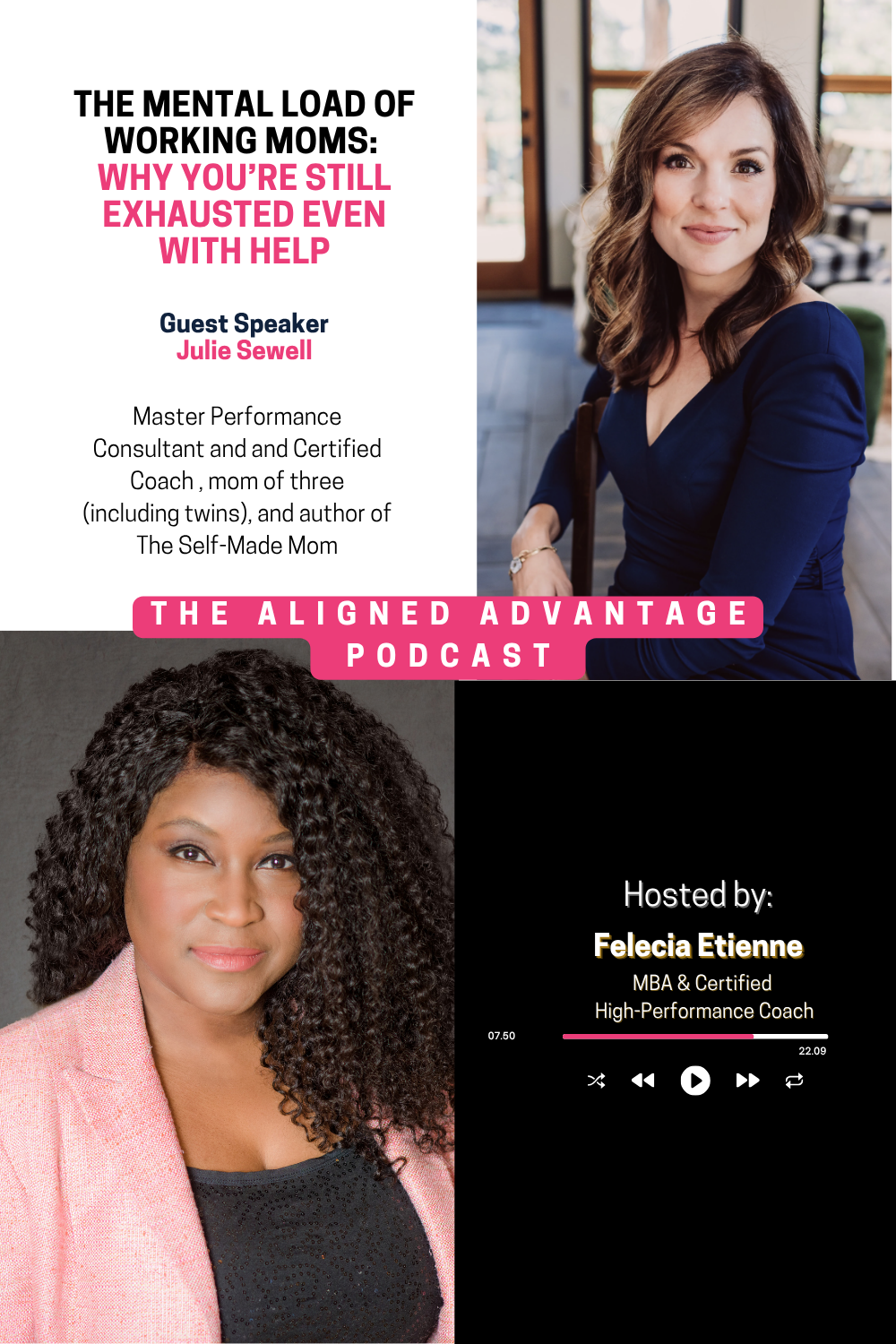
It’s one of the reasons I wanted to talk about the mental load of working moms with Julia Sewell, author of The Self-Made Mom. Julia is a Master Performance Consultant and a mom of three, including twins. She had spent more than a decade helping people perform at a high level. She also knew what it felt like to reach the end of her own capacity at home.
We talked about asking for help. But I also wanted to get underneath the things we keep doing because we believe a good mom, a valuable employee, or a strong leader should be able to handle them.
You can know how to lead a team and still struggle to say what you need at home. You can delegate at home and hold on to everything at work because you want people to see your value. We explored both.
You can keep performing and still miss the life you wanted
Julia had waited a long time to become a mother. She had been deliberate about it. Then she became a mom and realized she wasn’t enjoying it.
She told me about an argument with her husband when they had a toddler and six-month-old twins during the pandemic. She was exhausted, saying she didn’t feel supported and didn’t even want to own a business anymore. During the argument, her husband threw an acrylic red cup to the ground. It broke across the driveway and yard.
Snow covered the pieces that night. Over the following weeks, they kept appearing in the yard.
As Julia described it, I thought about how we cover up what we’re feeling. We tell ourselves we’ll deal with it when the children are older or the week settles down. Meanwhile, the frustration is still there. Something else happens, and it comes back up.
I recognized the words she had been saying. I hear versions of them from clients, too. “I’m so tired.” “I don’t want to do this anymore.”
Julia didn’t want to give up the people or the work she loved. She wanted to live differently within the life she had built.
You may still be getting everything done. What are you missing while you do it? Time with your family can become another stretch you’re trying to get through. The business you wanted can start to feel like something you wish you could escape.
I asked Julia where someone could begin, especially when they’re used to handling pressure and have reached the point where it’s affecting how they show up.
We started with the standards they’re trying to meet.
Whose standard are you working so hard to meet?
Julia talks about developing your own “self-made values.” We can carry a lot of instructions about what success looks like and what a good mother does. I wanted us to examine where those instructions came from.
I raised my hand on that one. We bring those expectations with us, sometimes without asking where they came from.
Your mother’s life and your life may be very different. What worked in her season may not work in yours. The same goes for a standard you set for yourself before children, before a promotion, or before the business grew.
So the question I brought to Julia was: Is this even mine? Do I need to do it?
Take one thing you keep telling yourself you should handle personally. What makes it important? Does it serve your family or your work now? Or are you trying to prove you’re the kind of person who can do it all?
Later, Julia named one of those beliefs: “If I don’t do it, I’ll be a bad mama.” I told her that we can hold ourselves to standards we would never want our daughters to hold themselves to. We can see how much it would cost them. Then we keep asking it of ourselves.
If you’re thinking, “But people depend on me,” I hear you. Look at what they need from you and what you’ve decided you must do personally. Those may be different things.
You can bring that distinction into a conversation about what matters and how to support it, with everyone’s responsibilities in view.
Have the conversation before you reach the breaking point
The night before we recorded, Julia told her husband she had an early podcast interview. He said he would handle breakfast and get the children onto the school bus.
She could prepare for our conversation. They had worked out the morning before either of them was trying to get through it.
The timing was something I emphasized. We often wait until we’re at the point of breaking down to communicate a boundary. By then, we’re frustrated, and the conversation can come out as a list of things the other person needs to stop doing.
In the interview, I talked about getting on the same side of the table. What do you need? What does the other person need? What can you agree on before you’re both under pressure?
Julia was clear that she and her husband had spent years learning to have those conversations. One request had a history behind it.
We also brought this into work. If you need something from a manager, or you’re making an agreement with a contractor, explain what the work requires. I encouraged listeners to include the benefit to the other person. How would the agreement help you deliver on the project or protect the quality of the work?
A conversation cannot guarantee someone will say yes. It does give you information to work with. If they cannot take something on, you can discuss what needs to change before the deadline arrives.
Who can you give their ownership back?
Julia described how she and her husband changed something they used to enjoy: a weekend away once a quarter. After children, each trip meant arranging childcare and preparing the house and food before they could leave.
They tried a three-hour dinner with a babysitter. They still had time together, with far less to arrange around it.
As she talked, I wrote down the word ownership. We can keep holding on to something because we had the capacity for it in an earlier season. Then we tell ourselves, “You did it before. You should be able to do it now.”
I asked, “Who can you give their ownership back?”
That includes the people on your team. It includes your partner and, where appropriate, your children. They need room to learn and take responsibility, too.
You may recognize the other side of this at work. You’re capable of handing things over, but you keep holding on because being needed feels connected to being valuable. We talked about how you can share responsibility in one part of life and carry almost everything in another.
If the work is still waiting for your decision, that part is still yours.
Look at one recurring responsibility. Someone else may be doing it, while you still decide when it happens or step in whenever there’s a question. What have you agreed they can own? What information would help them make the next decision?
Giving someone responsibility takes some conversation. It also asks you to let them use it.
What keeps getting postponed while everyone else gets what they need?
Julia calls one habit the “sacrifice pause.” When your partner’s business trip ends, you’ll exercise. When the kids’ sports season ends, you’ll get back to taking care of yourself.
Before we got there, I had asked her why we can follow through on other people’s priorities while the things closest to our own hearts keep stalling.
Think about what you’ve put on hold. Can you name when you’ll return to it? Or does the next demand keep taking its place?
Julia’s business gave us another example. Writing The Self-Made Mom meant investing time in something that wasn’t paying her the way a client appointment would. To write the book, she had to give it time within her work.
Julia’s decision needed to show up in how she ran the business. We talked about the confidence it took to invest in the book before it could pay her. You can say something matters to you and still give it no place in your week.
You might be facing a version of that decision with a project you want to begin, or an appointment you keep moving because somebody else needs you.
When Julia talked about protecting her client calls from interruptions, I came back to the arrangements we made during the pandemic. Many of us had to work and care for children at the same time. I did, too. It was tough.
If your circumstances have changed, are you still running your life as though those arrangements have to stay?
You may need more support than you have. You may also have a conversation you’ve been putting off about support that could be shared. Separate those so you can decide what to do next.
Try this with one responsibility this week
Here’s how I’d put our conversation to use. Choose one recurring job you believe you’ve handed over but still keep managing.
Write down the parts that remain with you. Include the preparation and the decisions. Then finish this sentence:
“For this to stop coming back to me, we need to agree on…”
Be specific. If someone handles breakfast and the school bus but you still prepare everything, the conversation needs to include that preparation. Ask what they can take on and what they need from you to do it.
Choose a time to talk before the next school morning. If a question comes back afterward, check whether your agreement left something undecided before you take the whole job back.
Then write down what you want to give some of that time or attention to. Make it something you can put in this week. You’ve already heard what waiting was costing Julia. Bring your own life into the decision, too.
Continue the conversation with Julia
Julia’s book, The Self-Made Mom: Reclaiming Power, Intention, and Joy in Modern Motherhood, shares her story and the work that followed that night in the driveway. Explore the book here.
In our full conversation on The Aligned Advantage, we also talk about confidence, the example she wants to set for her children, and the support she has learned to ask for.
When you know what needs to change and keep putting it off
You might finish reading this knowing which conversation you need to have. You may also recognize that you’ve known for a while.
In my coaching, we can work through what keeps bringing you back to the same arrangement. That might mean questioning a standard you’ve outgrown, agreeing on responsibility, or making a plan for what you’ll do when the usual request comes back to you.
I want you to be able to show up fully for the work and people you care about, with room for your own priorities in that life.
If you want help putting these decisions into practice, explore coaching with me.
Questions about the mental load of working moms
Why am I still exhausted when I have help?
Look at what the help covers. Someone may do the task while you keep the planning and follow-up. In our conversation, Julia and I looked at the responsibilities that remain, the standards behind them, and what it takes to share ownership. Use one recurring job to make that discussion specific.
How do I talk to my partner about sharing the mental load?
Choose a specific recurring responsibility and talk before you’re both rushing to get it done. Describe which parts you’re carrying, then discuss what each person can own and what support they need. Julia’s school-morning example shows one agreement she and her husband reached over time. As I emphasized in the conversation, you can approach the problem from the same side of the table.
Why do I feel guilty letting someone else do things?
Examine what you believe doing the task says about you. Does personally handling it mean you’re a good mom or a valuable colleague? Julia and I discussed how those expectations can make sharing responsibility difficult. I’d begin with the question I raised about standards: Is this even mine? Then look at what the situation requires of you now.
Can this apply if I’m not a mom?
Yes. I raised this during the interview because the invisible responsibilities women carry can show up in a career, business, or relationship. You might share responsibilities at home and still hold on to work because you want your team to see your value. Begin with one task that repeatedly comes back to you, then examine the decisions you’re keeping and the reason you keep them.
The Who Ran Your Week™ Diagnostic helps you examine that difference using the week you actually lived, not only the one shown on your calendar.
Felecia Etienne is the founder of The Aligned Advantage™, where she helps high-achieving founders, leaders, and professionals replace pressure-led performance with clear, sustainable execution.
To find out more about Felecia, you can visit her website at feleciaetienne.com.
Social Media Handles:

Keep Reading:
These articles go deeper into the guilt, mental load, and commitments that can leave your own priorities waiting.
How to Stop Being a People Pleaser: The Ultimate Guide for Ambitious Entrepreneurs and Leaders
For the moments when saying what you need feels harder than handling everything yourself. Explore the expectations and boundaries behind another automatic yes.
You’re Not Bad at Goal Setting. You’re Just Overloaded. The 3 Phases of Aligned Planning for High Achievers
A practical next read for getting the tasks and decisions out of your head before adding another commitment to your week.
These articles go deeper into the leadership, capacity, and execution patterns that keep important work dependent on what you have left.