Handling Pressure Isn’t Leadership: Why Reacting Under Pressure Is Eroding Your Self-Trust
You wouldn’t say you’re reacting.
You’d say you’re being responsive.
That you’re handling what’s in front of you.
That this is just what leadership looks like at this level.
I hear this most often after someone’s calendar finally clears for an hour. Nothing is technically wrong. But they don’t feel settled. They feel behind on something they can’t quite name.
You tell yourself you’ll slow down once things ease up.
Once the pressure lifts.
Once there’s more room to think clearly.
And on the surface, that sounds reasonable.
But here’s the part that doesn’t get said out loud.
Decisions don’t feel clean anymore.
Follow-through takes more effort than it used to.
You move all day, but direction feels strangely negotiable.
It’s like driving in fog. You’re still moving. You just can’t see far enough ahead to know if you’re actually leading.
Nothing is obviously wrong.
Yet something feels off.
Not in your results first.
In your relationship with your own decisions.
What This Article Is About
This isn’t an article about productivity.
And it’s not about pushing harder, being more disciplined, or managing your time better.
This is about what happens when the strategy that built your success stops working and quietly starts costing you authority.
In this piece, we’re going to look at:
Why reacting to pressure works early on and then becomes a liability later
How pressure slowly replaces leadership without you realizing it
And the difference between execution that’s led by urgency versus leadership that’s self-governed
Not to fix everything here.
Not to give you a framework you can implement from a blog post.
But to name the pattern clearly enough that you stop explaining it away.
If this is your first time here, welcome.
I’m Felecia Etienne. I work with high-performing leaders and entrepreneurs who aren’t struggling because they lack capability, ambition, or intelligence, but because the way they’ve learned to execute no longer holds at the level they’re operating.
I’ve seen this shift happen quietly. Not in a collapse. Not in a crisis. But in the way decisions start to feel heavier than they should.
This work isn’t about doing more.
It’s about leadership maturity.
Specifically, the shift from pressure-led execution to self-governed leadership.
Because the most expensive leadership breakdowns don’t announce themselves.
They show up in the small moments where you soften a decision and tell yourself you’ll revisit it later.
And that’s where we’re starting.
Why Reacting to Pressure Slowly Erodes Self-Trust
For a long time, reacting felt like leadership.
You built your reputation by being responsive.
When something needed attention, you handled it.
When pressure showed up, you absorbed it.
That capability became part of how you see yourself.
But there’s a cost most high performers miss.
When you repeatedly override your own decisions in response to urgency, something subtle happens. You start trusting the pressure more than you trust yourself.
Psychological research shows that our belief in our ability to follow through directly shapes how persistent and resilient we are. In simple terms, consistency builds internal confidence.
When what you decide and what you actually do drift apart, that confidence doesn’t collapse overnight. It thins.
I see this most often in small moments.
A leader decides to protect a block of strategic time.
Then a “quick request” comes in.
They adjust. Just this once.
A founder sets a boundary around availability.
Then reopens it because the moment feels urgent.
Nothing explodes.
But each time, a message is reinforced internally:
My decisions only hold when it’s convenient.
This is how self-trust erodes.
Not through failure.
Through accommodation.
You decide; then soften it.
You commit; then reopen it.
You set direction then let urgency renegotiate it.
It’s like bending a wire back and forth. One bend doesn’t break it. Repetition weakens the structure.
Nothing dramatic breaks.
But something inside you stops feeling solid.
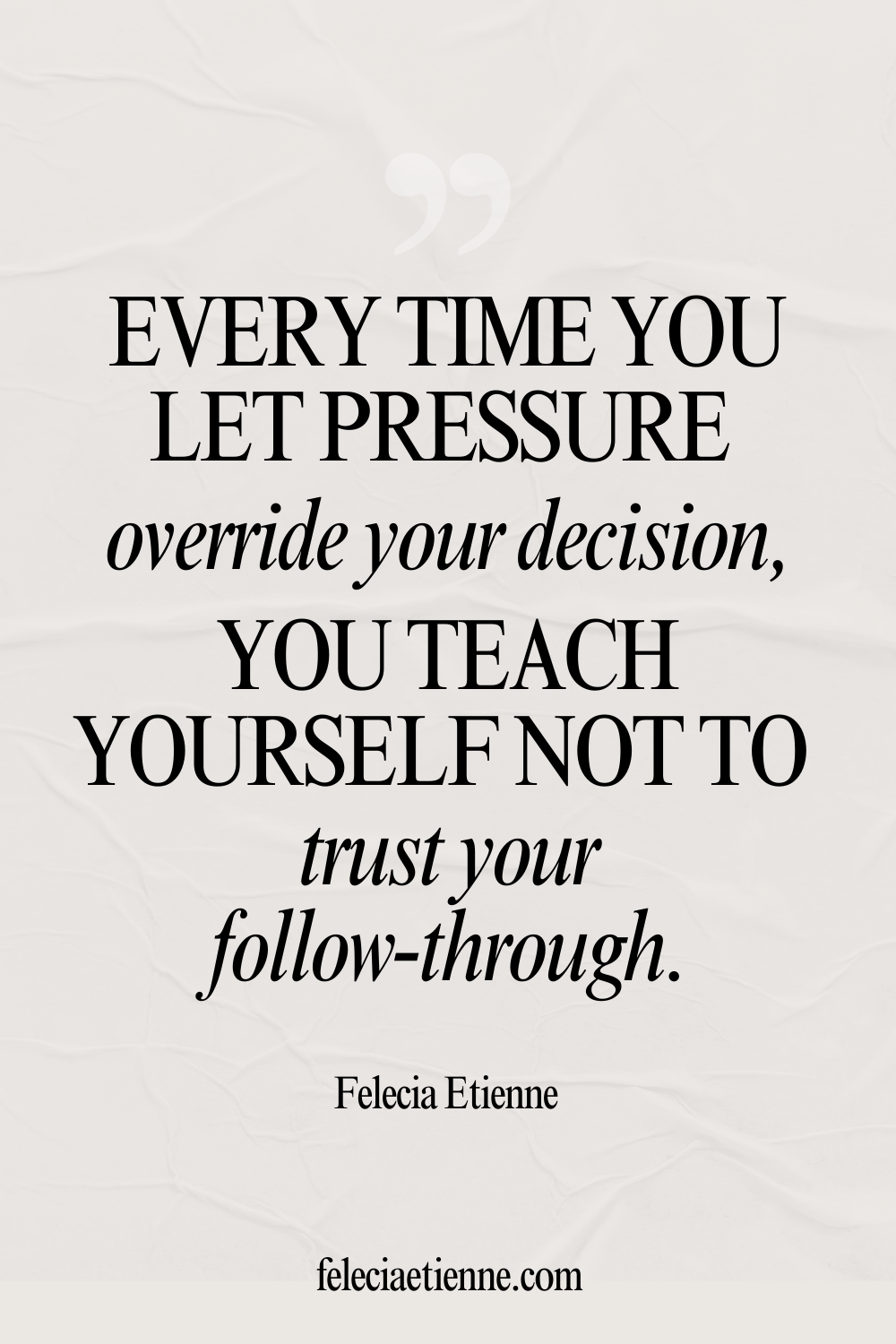
“Every time you let pressure override your decision, you teach yourself not to trust your follow-through.”
What the Research Shows About Pressure and Decision-Making
Pressure doesn’t just feel disruptive.
It changes how your brain functions.
In neuroscience, sustained stress weakens the prefrontal cortex, the part of the brain responsible for strategic thinking, impulse control, and long-term planning.
Amy Arnsten’s research on stress makes this clear: under chronic pressure, the brain shifts resources away from reflection and toward speed.
In leadership terms, the wiser part of your decision-making goes offline first.
This isn’t a mindset problem.
It’s biology.
When pressure becomes ongoing, the brain starts favoring immediate resolution over deliberate direction. Fast feels safer than thoughtful. Relief feels smarter than restraint.
I see this play out in subtle ways.
A leader knows the strategic decision they need to make.
But the inbox is loud.
Slack notifications keep interrupting.
The meeting just ran long.
So instead of holding the bigger decision, they answer what’s in front of them.
Not because they lack clarity.
Because under strain, the brain prioritizes reducing immediate cognitive load.
Behavioral science calls this cognitive load: the mental burden created by sustained decision demand.
When that load accumulates, even highly experienced professionals default to easier patterns.
In a well-known field study of judicial rulings, judges were significantly more likely to issue default decisions later in long sessions, with more favorable rulings increasing after breaks.
Not because they lost competence.
Because decision strain shifts patterns.
Under sustained pressure, the easier path becomes neurologically more appealing.
And when that pattern repeats, relief can begin to masquerade as leadership.
It feels decisive.
But it’s reactive.
It feels productive.
But it’s protective.
Like driving a high-performance car in heavy fog, you’re still moving. You just can’t see far enough ahead to lead with intention.
RELATED ARTICLE: MASTERING TIME: THE ULTIMATE GUIDE TO COUNTER-BALANCING PRIORITIES WITH THE IDEAL WEEK BY DESIGN
When Pressure Starts Making Your Decisions
It doesn’t feel like you’ve lost control.
It feels like you’re adapting.
You just finished a long meeting. Before you close your laptop, three new requests land. One feels urgent. One feels important. One feels politically sensitive.
So you reshuffle.
The strategic decision you’ve been meaning to make gets pushed to tomorrow. Just until things calm down.
Individually, each adjustment makes sense.
Collectively, they create a new operating system.
Pressure becomes the filter.
What’s loud gets handled.
What requires clarity gets delayed.
What requires courage gets softened.
What requires clean ownership waits for a better moment.
Over time, your leadership organizes around urgency instead of intention.
You’re still making decisions.
But you’re making them inside pressure instead of ahead of it.
Leadership shifts from choosing to coping.
And the most dangerous part is this:
It still looks like leadership from the outside.
You’re active.
You’re responsive.
You’re visible.
But internally, direction is no longer leading the day. Demand is.
When pressure becomes your decision-making system, leadership turns into constant negotiation instead of direction.
This is why execution starts to feel heavier at higher levels.
Not because the work is harder.
But because every decision now carries the added cost of cognitive strain and internal renegotiation.
When urgency becomes your organizing principle, clarity fragments.
Follow-through weakens.
Self-trust thins.
Leadership begins to feel like something you perform in response to events instead of something you hold steady through them.
That’s the moment reacting stops being a phase of performance and becomes a ceiling.
Related article: 12 Habits ALL Leaders Should Cultivate To Supercharge Their Results
Pressure-Led Execution vs Self-Governed Leadership
Most high performers are not failing at execution.
They are executing inside pressure.
Pressure-led execution relies on urgency to create movement.
Deadlines create focus.
Intensity creates action.
Relief reinforces the cycle.
It works, until it doesn’t.
Self-governed leadership operates differently.
Direction is set before pressure arrives.
Decisions are made deliberately and protected.
Urgency may test them, but it doesn’t rewrite them.
The difference isn’t discipline.
It’s structure.
Pressure-led execution asks,
“What needs my attention right now?”
Self-governed leadership asks,
“What did I already decide matters?”
Self-governance doesn’t eliminate stress.
It changes who stays in charge when stress shows up.
Under pressure, your brain will always favor speed over reflection. That’s human. But when decisions are consistently protected, something stabilizes internally. Confidence strengthens.
Follow-through feels cleaner. Leadership feels less performative and more grounded.
When decisions are repeatedly reopened, certainty thins.
When decisions are consistently held, self-trust stabilizes.
And self-trust is not motivational language.
It is a performance variable.
It determines whether your direction compounds or collapses under strain.
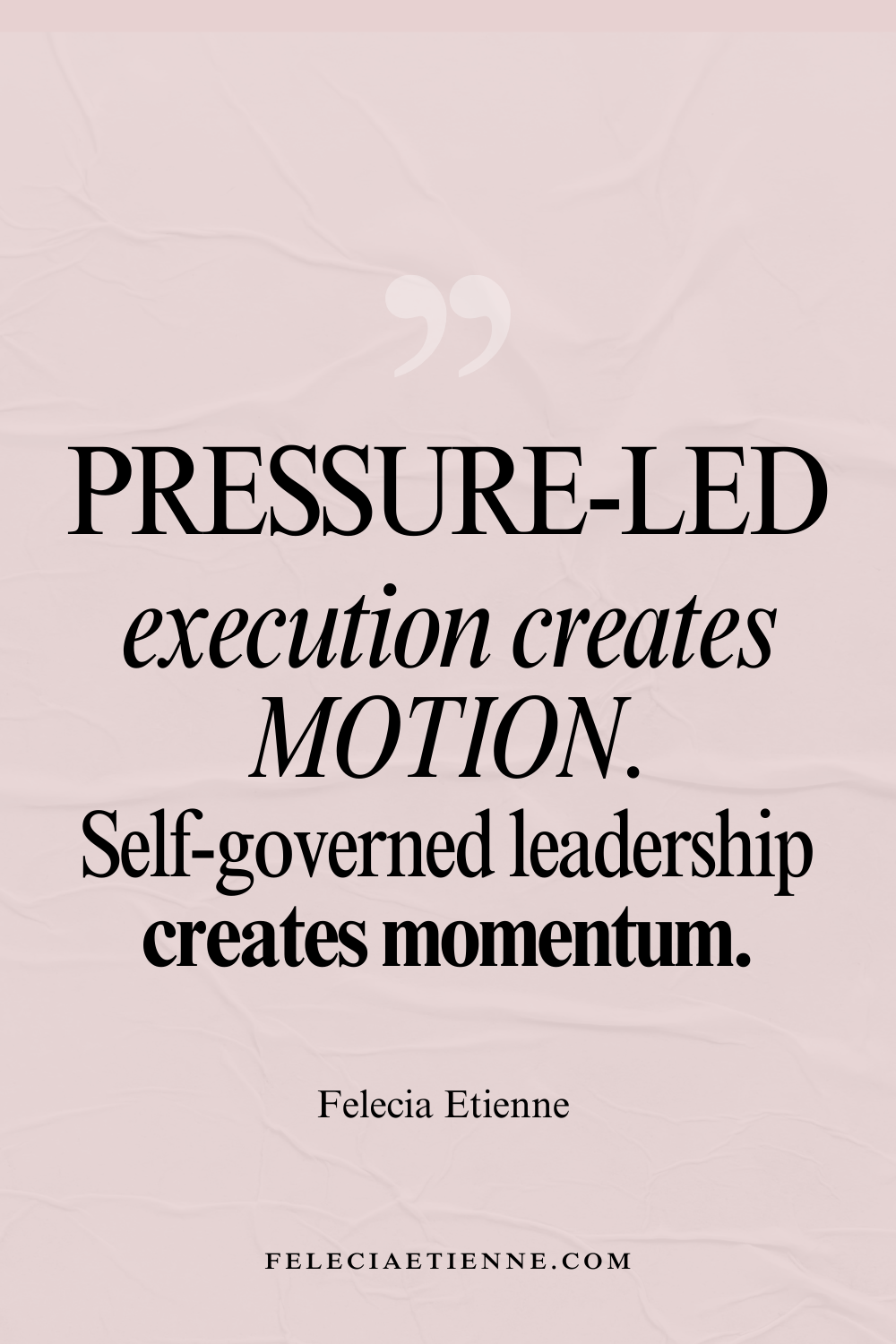
“Pressure-led execution creates motion. Self-governed leadership creates momentum.”
When execution is pressure-led, self-trust keeps leaking.
You follow through only when the moment forces you to.
When leadership is self-governed, self-trust begins to restore.
You follow through because your decisions are no longer negotiable with yourself.
This isn’t about becoming more disciplined.
It’s about deciding who’s actually in charge.
Because leadership isn’t proven by how much pressure you can absorb.
It’s proven by whether your direction holds when pressure shows up.
And once you see that difference, it becomes very difficult to keep calling reaction “leadership.”
Why Reactivity Doesn’t Scale
At higher levels, complexity increases before clarity does.
More people.
More consequences.
More variables tied to every delayed decision.
Pressure doesn’t just increase.
It multiplies.
A postponed decision no longer affects just your calendar.
It affects a team.
A client.
Revenue.
Momentum.
What felt manageable when it was just you becomes expensive when others depend on your direction.
This is where many high performers start feeling a new kind of exhaustion.
Not from working harder.
From constantly renegotiating.
Chronic, unmanaged pressure doesn’t just affect output. It changes how leaders experience their own effectiveness.
Decisions feel heavier. Clarity feels thinner. Confidence feels conditional.
Reactivity can create short-term movement.
But scale requires coherence.
And coherence requires governance.
Not rigidity.
Not control.
Governance.
Because at the next level, leadership isn’t about how much you can carry.
It’s about how consistently direction holds when the noise increases.
If your decisions are still being reshaped by urgency, growth will feel heavier instead of cleaner.
And effort doesn’t scale.
Governance does.
The Moment Leadership Becomes Self-Governance
There’s a moment most high performers don’t recognize as a turning point.
Nothing dramatic happens.
No failure. No breakdown. No obvious crisis.
It’s quieter than that.
You notice how often you renegotiate with yourself.
You decide to have the hard conversation, then postpone it because the week feels full.
You commit to protecting strategic time; then reopen it because something “important” came up.
You set direction; then soften it to keep the moment comfortable.
At first, it feels like flexibility.
Like maturity.
Like you’re being reasonable.
But leadership doesn’t mature through more responsiveness.
It matures through self-governance.
This is the moment the work changes.
Not when you decide what you want.
But when you decide your decisions are no longer provisional.
Self-governance begins when you stop outsourcing authority to circumstances.
When urgency, discomfort, or short-term relief no longer get a vote.
This is where most high performers hesitate.
Because self-governance isn’t loud.
It doesn’t create instant validation.
It doesn’t reward you with immediate relief.
It asks something more confronting.
That you hold direction even when pressure is present.
That you stand by a decision even when it would be easier to soften it.
That you let discomfort exist without undoing your leadership.
This shift isn’t dramatic.
It’s definitive.
Pressure-led execution creates movement by reacting.
Self-governed leadership creates stability by holding.
One depends on external force.
The other depends on internal authority.
And once leadership becomes self-governance, something important changes.
Follow-through stops being an effort problem.
It becomes an integrity agreement.
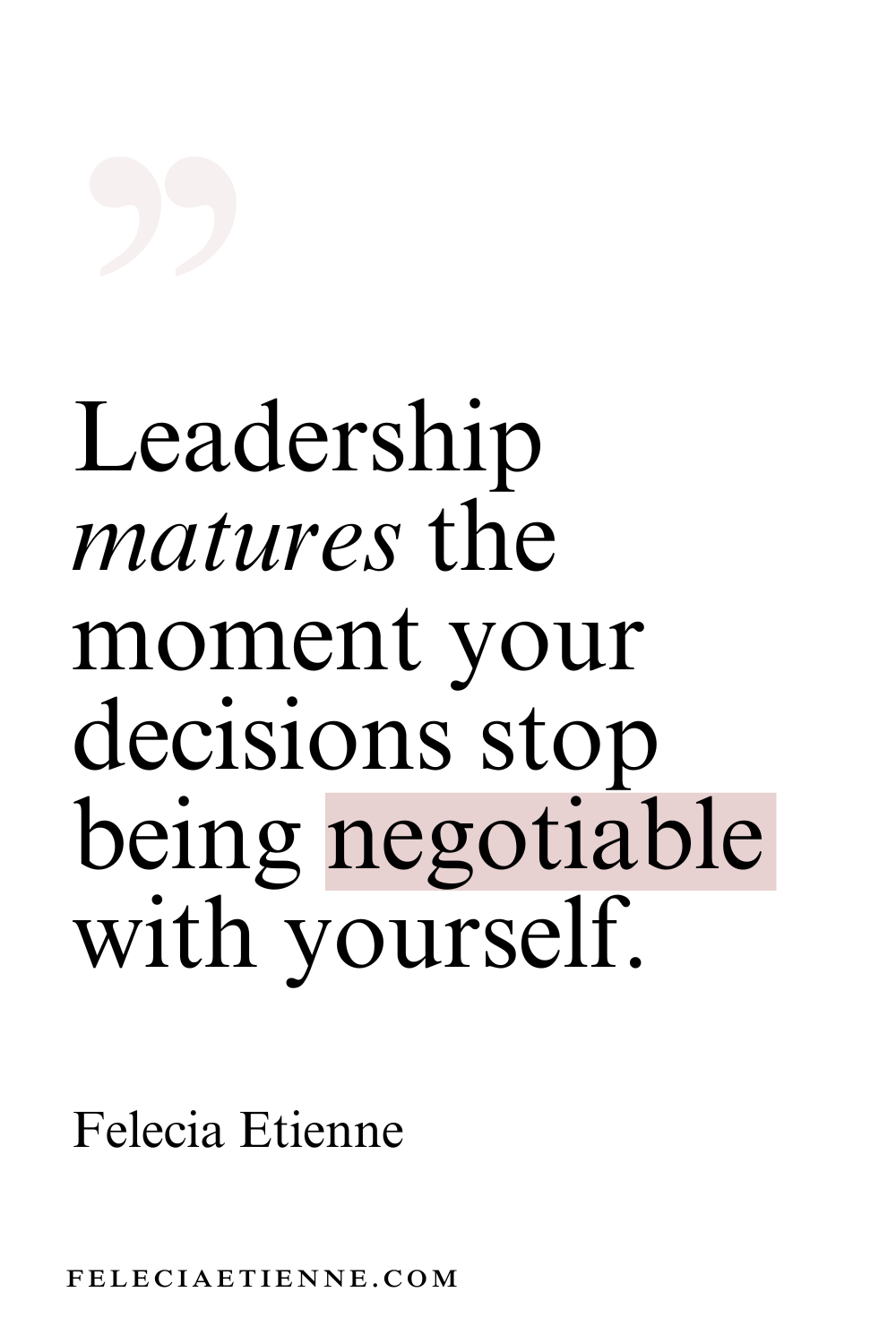
“Leadership matures the moment your decisions stop being negotiable with yourself.”
This isn’t about control.
And it isn’t about rigidity.
It’s about coherence.
Because when you govern yourself, pressure no longer decides who you are.
Related article: The #1 tool for Overcoming Imposter Syndrome | Self Compassion
It simply reveals whether your leadership is real.
Why This Becomes Non-Optional at the Next Level
There comes a point where reacting is no longer neutral.
It becomes expensive.
Not because you’re failing.
Because the environment you’re operating in has changed.
At the next level, volume increases before clarity does.
Complexity shows up faster than certainty.
And the margin for renegotiating decisions quietly disappears.
What used to work no longer holds.
Pressure doesn’t just increase.
It multiplies.
More people relying on your direction.
More revenue tied to your timing.
More consequences attached to every softened commitment or delayed call.
A decision you postpone doesn’t just sit on your calendar anymore.
It stalls a team.
It slows momentum.
It creates uncertainty downstream.
This is where leadership patterns get exposed.
When execution is pressure-led, growth feels heavier instead of cleaner.
Decisions bottleneck around you.
Energy fragments across competing urgencies.
Follow-through becomes conditional on how intense the moment feels instead of what you decided actually matters.
At earlier stages, reacting creates momentum.
At higher levels, it creates drag.
Because scale doesn’t require more responsiveness.
It requires coherence.
This is the part most high performers underestimate.
The problem isn’t that you’re not capable of more.
It’s that your current operating system can’t hold more without costing you.
Self-governance stops being optional when:
Delays ripple outward instead of staying contained
Pressure signals structural strain, not just urgency
At this level, leadership isn’t proven by how much you can carry.
It’s proven by how consistently direction holds when things get noisy.
“What got you here relied on pressure. What takes you further requires governance.”
This is why waiting doesn’t buy you time anymore.
It compounds the cost.
Not because you’re behind.
But because leadership without self-governance eventually turns into effort management.
And effort doesn’t scale.
At the next level, leadership stops being about what you can handle.
It becomes about what you refuse to renegotiate.
That’s not a personality shift.
It’s a structural requirement.
Where This Leaves You
If this landed, it’s probably not because anything here was new.
It’s because something you’ve been tolerating finally has a name.
You can feel the difference between reacting well
and actually leading yourself.
You can see where pressure has been useful
and where it’s quietly been in charge.
And you can sense that the next level isn’t about trying harder or being more disciplined with yourself.
It’s about holding direction steady when pressure shows up.
This is the point where most high performers face a decision.
They recognize the pattern and continue managing it alone; compensating, adjusting, negotiating with themselves in private.
Or they decide that leadership is no longer negotiable
and build structures that protect direction instead of relying on intensity.
If you’re ready for the second path, the next step isn’t a tactic.
It’s a container.
A structure that holds decisions when pressure rises.
That protects what matters when urgency gets loud.
That restores trust in your own follow-through.
That’s the work inside the Aligned Advantage ecosystem.
No urgency.
No pressure.
Just a clear decision about who, or what, you want leading from here.
Related article: UNLOCK YOUR SUCCESS: BOOST YOUR CHANCE TO SUCCEED BY 15X!
Leadership Under Pressure FAQ: Reacting vs Leading Yourself
1. Why am I always reacting instead of leading at work?
In neuroscience, sustained stress weakens the prefrontal cortex, the part of the brain responsible for strategic thinking, impulse control, and long-term planning. Amy Arnsten’s research on stress shows that under chronic pressure, the brain shifts toward faster, more reactive patterns.
In leadership terms, that means urgency starts feeling more natural than intention.
You’re not lacking discipline.
Your system has adapted to constant demand.
The issue isn’t effort.
It’s which part of your leadership is in charge.
2. What is decision fatigue, and does it affect leaders?
Decision fatigue refers to shifts in decision quality under sustained cognitive demand.
A widely cited field study of judicial rulings found that as decision sessions progressed, judges were more likely to default to easier rulings, with decision quality improving after breaks. The takeaway isn’t incompetence; it’s cognitive strain.
For leaders, prolonged pressure can subtly shift choices toward what feels safer or more immediately manageable.
When everything feels urgent, the brain conserves energy.
That conservation often looks like postponing harder decisions.
3. What is reactive leadership, and why is it a problem?
Reactive leadership is when urgency consistently determines priorities instead of deliberate intention.
Over time, this pattern erodes self-trust. Psychologist Albert Bandura’s work on self-efficacy shows that belief in your ability to execute directly influences resilience and persistence. When decisions are repeatedly softened or reopened under stress, internal confidence thins.
Reactivity creates motion.
But it prevents direction from compounding.
4. Why does follow-through feel harder as responsibility increases?
As responsibility grows, cognitive load increases.
More stakeholders. More variables. More consequences tied to timing.
Under pressure, the brain naturally prioritizes short-term relief over long-term coherence. When decisions are frequently renegotiated, follow-through begins to feel heavier; not because you are less capable, but because clarity isn’t consistently protected.
Execution becomes conditional instead of steady.
5. Is burnout just about working too much?
No.
The World Health Organization defines burnout as chronic workplace stress that has not been successfully managed. It includes exhaustion, mental distance, and reduced professional efficacy.
Burnout isn’t simply about hours worked.
It’s about prolonged pressure without structural control.
Leaders can remain highly productive while feeling progressively less effective. That disconnect is often the early signal.
6. What’s the difference between pressure-led execution and self-governed leadership?
Pressure-led execution relies on urgency to create action.
Self-governed leadership protects direction before pressure arrives.
In pressure-led execution, loud problems determine priority, and relief reinforces the pattern. In self-governed leadership, decisions are set deliberately and held steady even when pressure increases.
One depends on external force.
The other depends on internal authority.
7. What does self-governed leadership look like in practice?
Self-governed leadership establishes clarity before pressure shows up.
Direction is decided intentionally.
Commitments are protected consistently.
Urgency does not automatically override priority.
Stress may still exist.
But it no longer organizes the system.
That shift stabilizes self-trust and makes execution cleaner at higher levels.

P.S. If you're looking for deeper support as you navigate this transformative journey, here are two ways I can help:
Master Your Mindset: I specialize in helping high achievers, business owners, and professionals break into the top 1% of their field by mastering their mindset and boosting their performance. When you're ready to take your success to the next level, DM me the word "Edge," and let's start that conversation.
Free Resource for Change: Don’t let negative emotions hold you back! Grab my Self-Sabotage Solution Checklist: a free tool designed to help you identify and release the limiting beliefs that no longer serve you. Take the first step toward a more empowered you today!
Embrace this opportunity to shift from burnout to brilliance. Your path to sustainable success starts now!
Ready to achieve your dream life? I’m Felecia Etienne, your go-to Certified High-Performance Coach™ and Mental Fitness Coach. Let me take you on a transformative journey with a Complimentary Unlock Your Performance EDGE call. This isn’t just a chat, it’s your ticket to the high-performance tools and techniques I’ve shared with my coaching clients.
In this personalized call, you'll:
- Dive into your dreams and goals, tackle obstacles, and bridge the gap between where you are and where you want to be.
- Uncover and combat triggers of self-sabotage while discovering untapped strengths.
- You'll walk away with actionable strategies that deliver immediate impact
Equip yourself with the strategies, resources, and support needed to shatter obstacles, self-sabotaging, narrow the gap, and transform your ambitions into tangible achievements. Ready to escape inertia and boost your impact? Book a private and confidential session. Unlock Your Performance EDGE with Felecia. Let's unlock your potential together.
To find out more about Felecia, you can visit her website at feleciaetienne.com.
Social Media Handles:
Feeling stuck and unfulfilled? It's time to break free from self-sabotage!
Download our Self-Sabotage Solution Checklist and
start your journey to personal mastery today.