Starting Small Isn’t the Problem, Not Finishing Is: Why Follow-Through Feels Hard (Even When You Want the Outcome)
You wouldn’t say you’re stuck.
You’d say you’re being intentional.
That you’re thinking it through.
That now isn’t the moment to force a decision.
You tell yourself you’ll come back to it once things settle.
Once there’s more space.
Once it doesn’t feel so heavy to hold.
And technically, none of that is wrong.
But there’s a quiet friction you don’t talk about.
It takes longer to move on things you know matter.
You hesitate, then explain the hesitation so it sounds reasonable.
You still want the outcome.
You just don’t lead yourself through the moment when resistance shows up.
So you leave things open.
You soften your own commitments.
You handle what’s urgent and avoid what requires a cleaner decision.
From the outside, nothing looks off.
But internally, something has shifted.
Following through doesn’t feel clean anymore.
It feels effortful.
“Every time you delay a decision for relief, you teach yourself not to trust your follow-through.”

And when you delay, there’s a brief relief followed by a low-grade irritation you don’t quite name.
Not because you don’t care.
But because part of you knows you’re not leading yourself through the moment that matters.
And that’s where things start to change.
Quietly. Incrementally.
Not in results first.
In self-trust.
👋🏾 If this is your first time here
Welcome to Aligned Advantage.
I’m Felecia Etienne. I work with high-performing leaders and entrepreneurs who aren’t struggling because they lack discipline, ambition, or intelligence, but because the way they’ve learned to execute is no longer sustainable or clean.
This work isn’t about doing more.
It’s about restoring internal leadership, self-trust, and follow-through without pressure-based performance.
What we’re looking at here
In this article, we’re going to look at:
Why follow-through doesn’t usually break over time, but in a single moment of hesitation
What’s actually happening internally when execution starts to feel heavier than it should
And why waiting, even when it feels responsible, quietly costs more than most leaders realize
Not to fix everything here.
Not to give you a system in a blog post.
But to name the pattern clearly enough that you stop explaining it away.
Because the most expensive leadership breakdowns don’t happen loudly.
They happen in moments we keep justifying because they once worked.
“You don’t stop leading yourself loudly. You do it in moments you can explain.”

The Moment You Stop Leading Yourself
You don’t think of it as hesitation.
You think of it as being careful.
As not forcing something before it’s ready.
As giving yourself space to make the right call.
So instead of deciding, you leave it open.
You don’t cancel the commitment.
You don’t fully commit to it either.
You adjust it just enough that you don’t have to deal with the weight of it yet.
You tell yourself you’re not avoiding the decision.
You’re being responsible with your energy.
You’ll come back to it when you can give it the attention it deserves.
What that really means is you move on to what feels easier to carry.
You handle what’s urgent.
You take care of what’s visible.
You postpone what requires a clean internal decision.
Nothing looks wrong from the outside.
But inside, something shifts.
You start leaving more things unfinished.
You keep more decisions “in progress.”
You build flexibility into your goals so there’s room to renegotiate later.
Not because you don’t care.
And not because you lack discipline.
But because you’ve learned that delaying feels better than deciding.
And over time, that becomes familiar.
You start explaining your hesitation instead of questioning it.
You start trusting your reasoning more than your follow-through.
That’s the moment self-leadership doesn’t disappear.
It just stops showing up when it matters.
RELATED ARTICLE: Unlocking Your Potential: 9 Must-Do Steps for Personal Transformation and Growth
What This Pattern Starts Costing You
At first, nothing looks broken.
You’re still delivering.
Still stepping in when it matters.
Still the person people rely on.
But the cost shows up in how work starts to move around you.
Decisions linger longer than they should.
Not because they’re complex, but because they never fully close.
You find yourself circling the same topics.
Reopening conversations you thought were settled.
Clarifying expectations that should already be clear.
Momentum slows in ways that are hard to point to.
Projects stretch.
Deadlines soften.
Things hover in progress instead of landing cleanly.
So you adjust.
You stay closer to the work.
You insert yourself where you shouldn’t need to be.
You keep your hands on things that should already be moving without you.
And slowly, pressure consolidates.
More decisions funnel through you.
More approvals wait on you.
More people look to you for clarity, you didn’t fully claim earlier.
Even progress starts to feel different.
Wins don’t relieve pressure.
They just make room for the next thing that needs your attention.
This is where the shift happens.
You’re not leading at the level you think you are.
You’re managing friction that didn’t need to exist.
Not because you lack skill.
But because hesitation upstream creates drag downstream.
When decisions stay soft, execution gets heavy.
When clarity is delayed, effort multiplies.
And over time, you become the constraint you never intended to be.
“Delay doesn’t look like avoidance when you know how to explain it.”

Why Hesitation Feels Like Relief
This isn’t about discipline.
And it’s not about motivation.
It’s what happens when you’re carrying more unresolved decisions than your system can comfortably hold.
I see this in very specific moments.
A leader who knows exactly what decision needs to be made, but keeps finding reasons to wait.
A founder who stays involved in details they should have released months ago.
A parent who keeps moving through the day because stopping would mean feeling how depleted they actually are.
Different lives. Same signal.
When executive bandwidth is full, the system looks for relief.
Not long-term relief.
Immediate relief.
Closing a loop takes energy.
Deciding creates consequence.
Leading yourself through resistance requires presence.
So hesitation starts to feel like the lighter option.
Leaving things open creates space.
Renegotiating buys time.
Delay lowers the pressure just enough to keep going.
The nervous system reads that as success.
But relief isn’t resolution.
It’s like running too many tabs in a browser. Nothing crashes right away. The system just slows down. Everything takes more effort than it should.
related article: The Trap of High-Functioning Burnout: When Success Starts to Feel Like Survival
Every open decision runs in the background.
Every unresolved commitment consumes capacity.
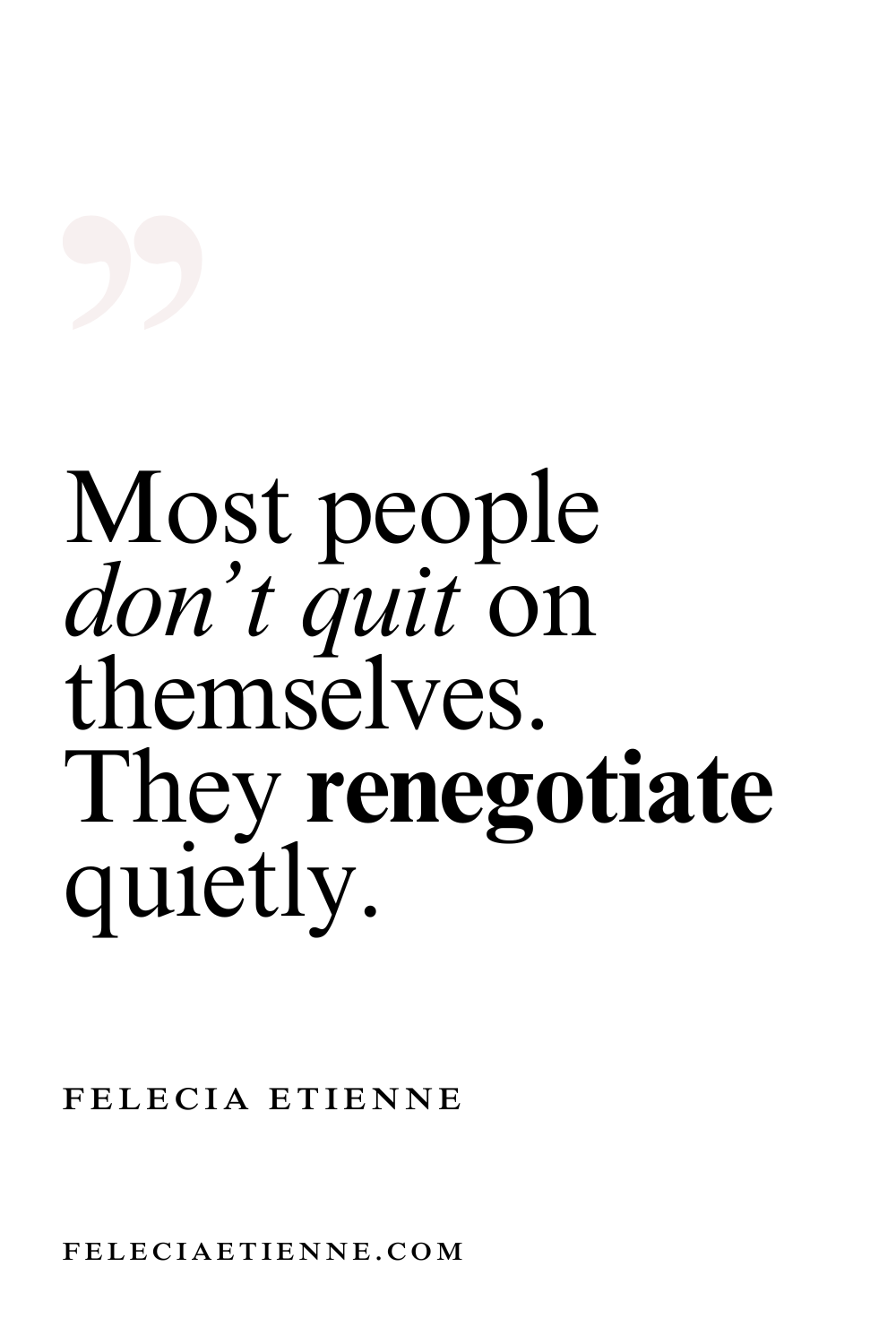
“Most people don’t quit on themselves. They renegotiate quietly.”
So even though waiting feels easier, it quietly makes execution heavier.
That’s why small decisions start to feel disproportionate.
Why clarity feels harder to access.
Why momentum requires more effort than it used to.
Not because you’re failing.
But because your system has learned that hesitation reduces pressure in the short term, even as it increases drag in the long term.
And once that pattern sets in, willpower doesn’t break it.
What Self-Leadership Actually Requires
At this level, leadership isn’t about forcing yourself to do more.
It’s about what happens the moment resistance shows up.
Most people think self-leadership means discipline.
Pushing through. Powering past. Making yourself comply.
But that version of leadership disappears exactly when things get uncomfortable.
Real self-leadership looks quieter.
It’s staying with the decision instead of stepping away from it.
It’s noticing the urge to delay and not immediately explaining it away.
It’s holding yourself steady when backing out would feel easier.
Because every time you create distance between yourself and discomfort, something subtle happens.
You lose contact with your own authority.
Not all at once.
Not dramatically.
But enough that leadership starts relying on pressure instead of presence.
This isn’t a personality issue.
It’s a capacity issue.
And capacity shows up most clearly when there’s friction.
The leaders who maintain clarity and follow-through over time aren’t the ones who push harder.
They’re the ones who don’t disappear when things feel heavy, uncertain, or inconvenient.
They stay in the moment long enough to lead themselves through it.
You don’t need more discipline.
And you don’t need another push.
You need an internal leader that doesn’t step away the moment relief becomes tempting.
Self-leadership isn’t about pushing harder.
It’s about not disappearing when things feel heavy.
Related article: How to hold yourself accountable as a leader: 5 powerful tips
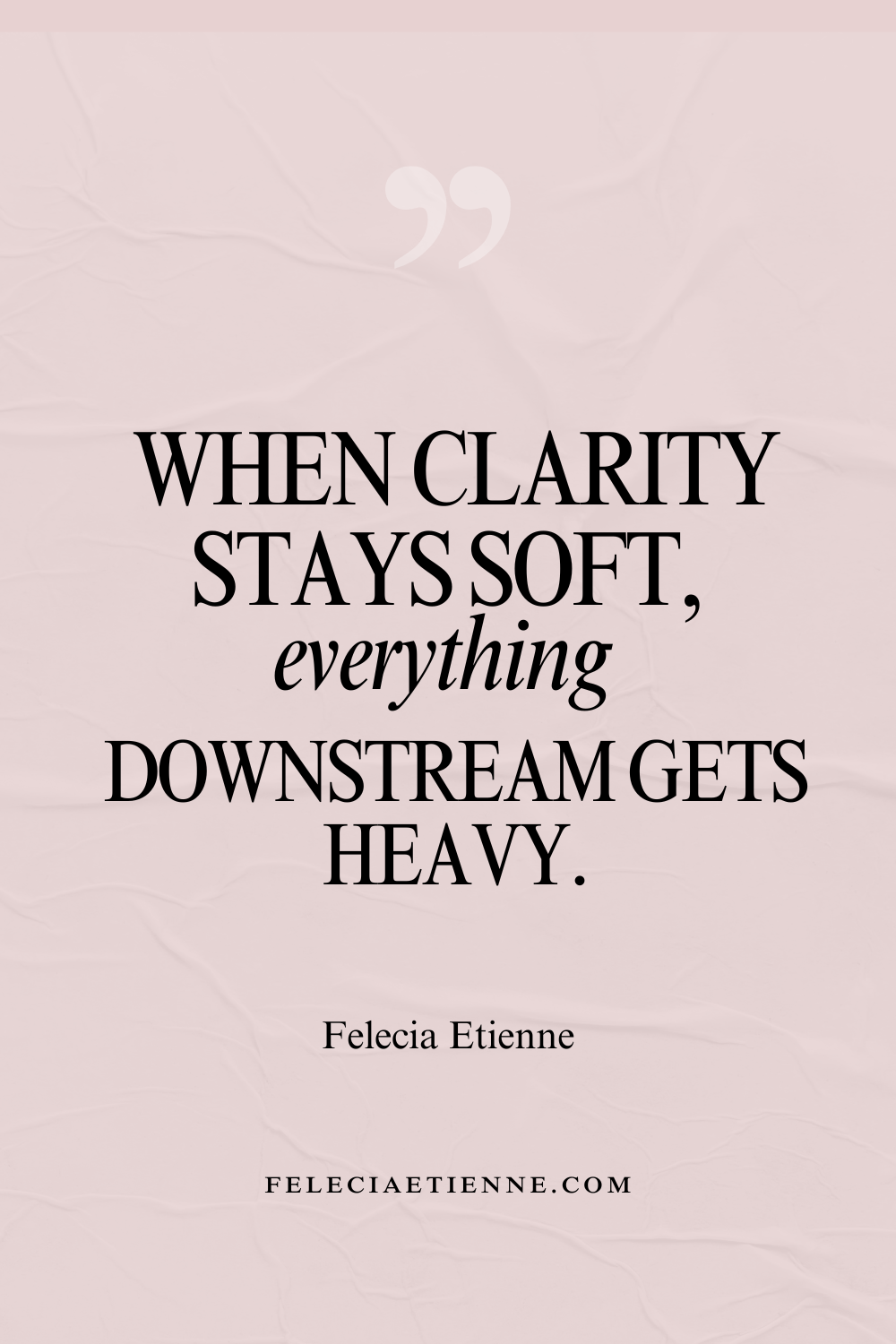
“When clarity stays soft, everything downstream gets heavy.”
Why This Pattern Doesn’t Fix Itself
This doesn’t fix itself with time.
Time is usually what makes it feel normal.
Every time you hesitate and nothing immediately collapses, your brain logs it as proof.
See? You can wait.
See? You can keep moving without closing the loop.
So you do it again.
One unmade decision turns into two.
Two turns into a way of operating.
And eventually it stops feeling like a choice.
It starts feeling like you.
You start saying things like, “I just need a little more space.”
“I’m better under pressure.”
“It’s not a good time to decide.”
“I’ll circle back when things slow down.”
And because you’re still producing, it’s easy to miss what’s actually shifting.
In seasons where growth is demanding clearer leadership, this pattern gets expensive fast.
When decisions stack.
When other people need clean direction.
When your business requires handoffs, not heroics.
If clarity stays soft, everything downstream gets heavier.
More things route through you.
More people wait on you.
More progress depends on your attention instead of your leadership.
That’s the ceiling.
Not your talent.
Not your potential.
The ceiling is the version of you that keeps using hesitation as relief, then wonders why everything feels harder than it should.
The leaders who break this pattern don’t do it by trying harder.
They rebuild follow-through on purpose.
They treat self-trust like something you construct, not something you hope returns.
They lead with rhythm instead of self-pressure.
Because patterns this quiet don’t dissolve on their own.
They get interrupted by a different standard of self-leadership.
If this landed, don’t move past it too quickly.
Pay attention to the moment you usually explain away.
The pause that feels responsible.
The hesitation that gives relief, then quietly costs you later.
You don’t need more motivation.
And you don’t need to push yourself harder.
But you do need a way to slow that moment down enough to stay with it.
The CEO Rhythm Reset Workbook exists for that reason.
Not as a productivity tool.
Not as something to “work through.”
As a deliberate interruption to the pattern you’ve been relying on.
A way to rebuild follow-through and self-trust through rhythm, not pressure.
If you’re ready to stop circling the same moment and start leading yourself through it, that’s the place to begin.
“Relief is the reason capable leaders hesitate long enough to become the bottleneck.”

Why Follow-Through Feels Hard and Self-Trust Starts Slipping
1. Why does follow-through feel so hard even when I want the outcome?
Follow-through feels hard when unresolved decisions create ongoing cognitive load.
Research in cognitive load theory shows that the brain continues to expend energy on decisions that haven’t been fully resolved, even when you’re not actively thinking about them. These open loops reduce available executive function, making action feel heavier than it should.
This is why you can still care deeply about an outcome and yet feel resistance when it’s time to move. The issue isn’t motivation. It’s bandwidth.
2. Why don’t I trust myself to follow through anymore?
Self-trust erodes through repeated internal renegotiation, not failure.
Behavioral psychology shows that trust is built through predictability. When intentions and actions stop lining up consistently, even in small ways, the brain learns to expect inconsistency. Over time, this conditions hesitation as normal.
Each delayed decision reinforces the belief that follow-through is unreliable, even when your intentions are sincere.
3. Why do I keep hesitating instead of making decisions?
Hesitation is often a stress response, not a thinking problem.
Research on executive function under stress shows that when cognitive and emotional load remain high for extended periods, the brain prioritizes short-term relief over long-term planning.
Delaying decisions lowers immediate pressure, which the nervous system registers as safety.
That relief feels responsible in the moment, but it trains avoidance instead of leadership.
4. Why does everything take more effort than it used to?
When too many decisions remain open, attentional and task-switching costs increase.
Studies on task-switching and attentional load show that unresolved commitments consume background mental energy. As these open loops accumulate, execution requires more effort even when tasks themselves haven’t changed.
This is why progress can feel slower and heavier, despite experience and competence.
5. Is this burnout, or something else?
What many people call burnout is often leadership fatigue, not exhaustion.
Burnout typically comes from doing too much. Leadership fatigue comes from carrying too many unresolved decisions for too long. Research in occupational stress shows that when clarity is delayed, effort increases, and pressure replaces presence.
The result looks like burnout, but the root cause is unled moments accumulating over time.
related article: The Overwhelm Hangover: Why You Don’t Feel Ready for the New Year (Even When You Want To)
6. Can self-trust and follow-through be rebuilt after repeated delays?
Yes, but not through motivation or self-pressure.
Research on behavioral change shows that trust is rebuilt through consistent patterns, not intensity. When leaders change how they respond to hesitation and begin closing loops deliberately, predictability returns and self-trust follows.
This is a structural shift, not a mindset shift.
“Self-leadership isn’t about pushing harder. It’s about not disappearing when things feel heavy.”


P.S. If you're looking for deeper support as you navigate this transformative journey, here are two ways I can help:
Master Your Mindset: I specialize in helping high achievers, business owners, and professionals break into the top 1% of their field by mastering their mindset and boosting their performance. When you're ready to take your success to the next level, DM me the word "Edge," and let's start that conversation.
Free Resource for Change: Don’t let negative emotions hold you back! Grab my Self-Sabotage Solution Checklist: a free tool designed to help you identify and release the limiting beliefs that no longer serve you. Take the first step toward a more empowered you today!
Embrace this opportunity to shift from burnout to brilliance. Your path to sustainable success starts now!
Ready to achieve your dream life? I’m Felecia Etienne, your go-to Certified High-Performance Coach™ and Mental Fitness Coach. Let me take you on a transformative journey with a Complimentary Unlock Your Performance EDGE call. This isn’t just a chat, it’s your ticket to the high-performance tools and techniques I’ve shared with my coaching clients.
In this personalized call, you'll:
- Dive into your dreams and goals, tackle obstacles, and bridge the gap between where you are and where you want to be.
- Uncover and combat triggers of self-sabotage while discovering untapped strengths.
- You'll walk away with actionable strategies that deliver immediate impact
Equip yourself with the strategies, resources, and support needed to shatter obstacles, self-sabotaging, narrow the gap, and transform your ambitions into tangible achievements. Ready to escape inertia and boost your impact? Book a private and confidential session. Unlock Your Performance EDGE with Felecia. Let's unlock your potential together.
To find out more about Felecia, you can visit her website at feleciaetienne.com.
Social Media Handles:
Feeling stuck and unfulfilled? It's time to break free from self-sabotage!
Download our Self-Sabotage Solution Checklist and
start your journey to personal mastery today.